
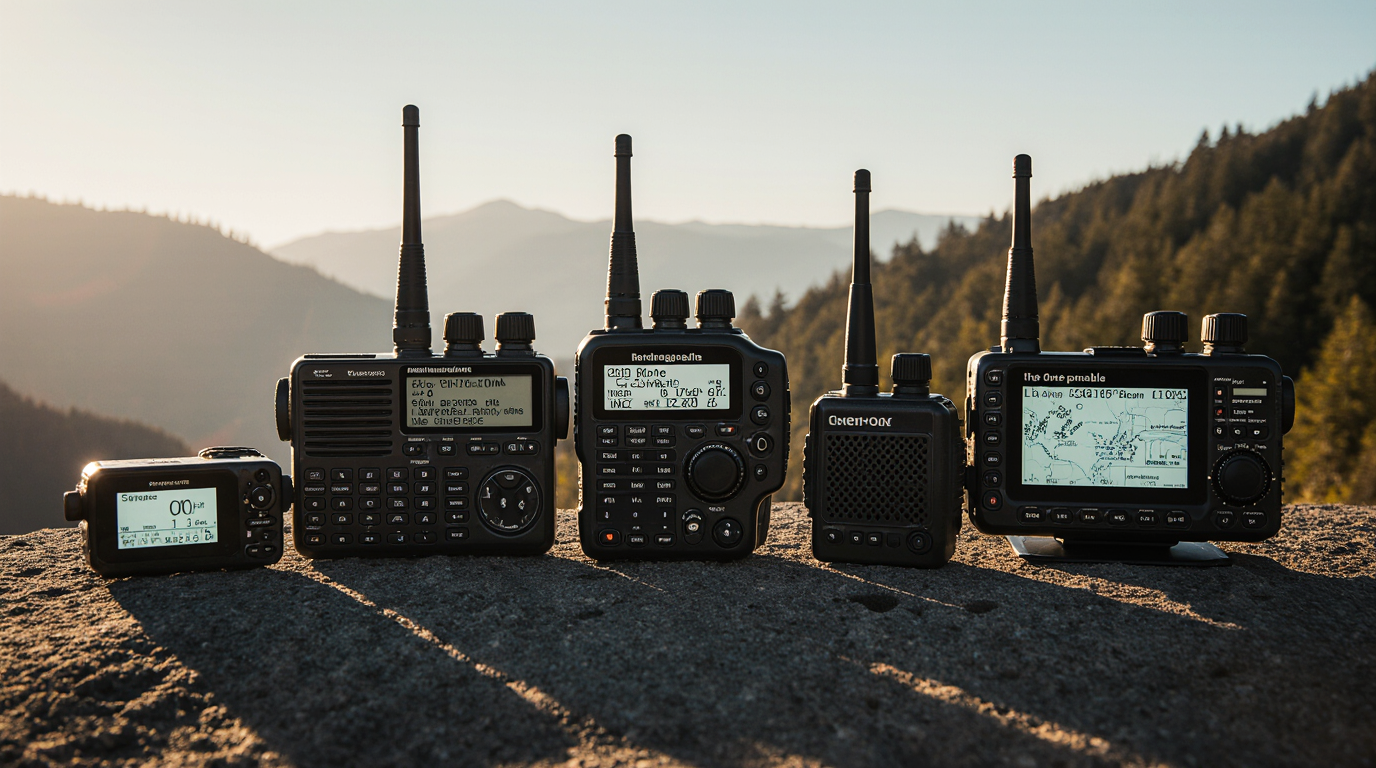
Top Best Shortwave Radio to Buy in 2026: Pros and Cons

Top Best Shortwave Radio to Buy in 2026: Pros and Cons

Introduction to The Best Shortwave Radio

Shortwave radios are unique communication devices that operate within the shortwave frequency range, typically from 3 to 30 MHz. This frequency range allows these radios to transmit and receive signals over great distances, as they can reflect off the ionosphere and cover spans that far exceed those achievable with standard AM or FM radios. Their ability to penetrate geographical barriers makes them particularly useful for global broadcasting, attracting a diverse audience of users including hobbyists, travelers, and individuals seeking reliable information in emergencies.
The appeal of shortwave radios lies not only in their capacity for long-distance communication but also in the variety of channels and services they can access. Users can tune into international broadcasts, emergency communications, and even amateur radio conversations. For many enthusiasts, the allure of shortwave listening is the thrill of discovering new stations and experiencing global broadcasts that may not be available through conventional media channels.
In addition to catering to recreational users, shortwave radios play a significant role during crises. They serve as a vital tool for receiving vital news updates when traditional communication methods fail or become unreliable, particularly in remote areas or during natural disasters. Such capabilities highlight the importance of owning a reliable shortwave radio, which leads us to the selection of the best shortwave radios to buy in 2026. With advancements in technology, these devices have become more user-friendly, offering features that enhance performance and ease of use, making them essential for both amateurs and serious users alike.

Criteria for Selecting the Best Shortwave Radio

Choosing the best shortwave radio necessitates an understanding of several essential factors that contribute to an optimal listening experience. One of the primary aspects to consider is sound quality. The clarity and richness of the audio output significantly affect the user’s enjoyment, making it crucial to select a model with excellent audio performance.
Another critical factor is the tuning options available on the radio. Some shortwave radios offer analog tuning, while others provide digital options. Digital tuning tends to be more precise and easier to use, allowing listeners to quickly find their desired frequency. A radio with a wide tuning range also increases the likelihood of accessing a variety of stations, enhancing the overall listening experience.
Battery life is an often-overlooked aspect that can affect portability and usability. A device with long battery life can provide extended listening periods without the inconvenience of frequent recharging. This feature is particularly important for travelers or those who may be in areas with limited access to power. Portability, in general, is vital; a lightweight design with a compact size can make the best shortwave radio more convenient for users on the go.
Brand reputation is another essential factor. Established brands often have a history of providing quality products and customer support, which can result in a more satisfying purchase. Additionally, users should consider extra features, such as Bluetooth connectivity or built-in speakers. These features can add versatility to the radio, allowing for more than just traditional listening.
Ultimately, assessing these criteria will help potential buyers select the best shortwave radios to buy, tailored to their unique needs and preferences. Understanding these aspects can lead to a more informed decision when navigating through the available options in the market.

Top 5 Shortwave Radios of 2026

In 2026, enthusiasts of shortwave radio have a selection of impressive options to consider. We will review five of the best shortwave radios to buy this year, emphasizing their specifications, features, and user experiences to help you make an informed decision.

1. Tecsun PL-880

The Tecsun PL-880 is often heralded as one of the best shortwave radios for serious users. With its digital signal processing technology, it offers exceptional reception across multiple bands. This model features a large LCD display and has capabilities such as SSB (single sideband) tuning. Users appreciate its compact design yet powerful sound. Its pricing typically falls in the mid-range, making it a solid investment.

Pros

The PL-880 is known for strong sensitivity and selectivity on shortwave and SSB bands, allowing listeners to pull in weak or distant signals better than many other portable receivers. Its dual conversion design helps reduce noise and improve clarity. 

This radio covers AM, FM, Longwave, Shortwave, and SSB, giving you wide listening options — from broadcast stations to utility and ham bands.

Users consistently praise the crisp and clear sound quality for both broadcast and shortwave listening, which makes long sessions more enjoyable.

Selectable bandwidth filters and precise tuning (10 Hz steps) help reduce interference and make it easier to zero in on signals.

Despite its performance, the PL-880 is compact and portable, making it great for travel, DXing outdoors, or keeping in an emergency kit.

A generous memory bank lets you store hundreds of frequencies, which is useful if you like organizing stations across bands. 

The rechargeable battery typically lasts many hours of listening on a single charge, which is ideal for field use.

Cons

Because the PL-880 has many advanced features (filters, SSB tuning, sync detector, etc.), new users may find it initially overwhelming.

Some listeners note that medium wave/AM reception isn’t as strong or clean as other bands.

Several users report that tuning control can feel stiff or uneven, and the knob operation may require careful handling.

A few reviewers mention that SSB reception can have quirks or require extra adjustment on weak transmissions, and automatic gain control (AGC) behavior can lead to uneven audio during fades.

Compared with basic portable radios, the PL-880 sits at a higher price point, though that’s reflective of its advanced features.

The screen is functional but lacks custom station name tagging or rich text, which some users expect in newer radios.

2. Sangean ATS-909

Renowned for its superior sound quality, the Sangean ATS-909X is another compelling choice among the best shortwave radios to buy. This model boasts a wide frequency range and a robust memory for storing channels. Users have noted its user-friendly interface and excellent battery life. It is priced higher than some competitors but is considered a long-term investment for avid listeners.

Pros

Supports FM, Shortwave (SW), Medium Wave (MW), Longwave (LW), and Air Band, giving you versatile listening options across broadcast, utility, and aviation frequencies.
 
The radio can store up to 1,674 presets with three memory banks — great for organizing favorite stations without repeated scanning.
 
Offers several tuning methods (manual, ATS auto-scan, memory recall) plus fine tuning and quick-shift control, making station acquisition flexible and precise.
Allows users to adjust bandwidth manually or use automatic control for optimal reception depending on conditions.
 
A clear, adjustable backlight display makes it easy to read frequency info, signal strength, and station names.
 
Features like RDS display for FM, signal strength/SNR meters, tone control, alarm timers, and world time zones extend functionality beyond basic reception.
 
Smart detection helps ensure reliable charging of AA cells and alerts you if a battery is bad.
 
Many users praise good audio and reliable reception sensitivity across bands when paired with a good antenna.

Cons

While the radio supports USB/LSB, several reviewers note that SSB audio volume and sensitivity can be low unless using external antennas or specific settings, which can make voice reception in single sideband less satisfying.
 
Some users find the automatic bandwidth switching distracting and recommend sticking to manual bandwidth control instead.
 
Instances of medium wave bleed-through during longwave listening have been reported, meaning LW performance may not be as clean on some units.
It’s a larger, heavier portable compared with compact travel radios, so it’s less convenient to carry for field operations.
 
Requires four AA cells (not included), so users must purchase power separately, which adds to the initial cost.
 
A few listeners mention loose whip antennas or stiff buttons, and that tuning quirks or calibration could be better, though quality control varies by unit.

3. Kaito KA500

The Kaito KA500 stands out for its versatility. This solar-powered model can efficiently function daily without relying solely on conventional power sources. Additionally, its rugged design makes it suitable for outdoor use. Although the sound quality is not as high as some higher-end models, it’s often praised for its portability. Expect a budget-friendly price when considering this radio.

Pros

The KA500 offers five ways to power the unit — solar panel, hand crank (dynamo), wind-up, AA batteries, and DC input — making it exceptionally reliable when electricity is unavailable. This versatility is a major advantage for emergency kits and outdoor use.
 
Receives AM, FM, Shortwave (SW) and NOAA Weather Alert channels, allowing you to stay informed about news, local broadcasts, and critical weather updates during storms or disasters.

Includes a flashlight, reading lamp, and built-in signal buzzer — all crucial when power is out, night falls, or visibility is low.

The rechargeable battery and crank/solar options can charge small devices like cell phones or USB gadgets, providing connectivity when you need it most.

Compact and lightweight for easy storage in backpacks, emergency bins, cars, boats, or camping gear.

Straightforward tuning and functional controls make it suitable for beginners and non-technical users.

Combines multiple survival tools (radio, flashlight, charging) into one affordable unit — excellent for preparedness without heavy expense.

Cons

Compared with dedicated shortwave receivers, the SW band reception may be weaker, with less selectivity and range — more suited for general listening than DXing.


While the multiple power sources add redundancy, the crank or solar charging is relatively slow. You may need extended effort to achieve a full charge via solar or hand crank.

The emergency charger works best for low-power devices; charging modern high-capacity smartphones may be slow or limited in effectiveness.

The built-in speaker provides functional audio but lacks depth and volume compared to larger tabletop radios.

Flashlight and reading lamp are convenient, but run time on crank/solar or battery power is not long, requiring supplemental power for extended use.

Unlike more advanced radios, the KA500 lacks an external antenna input, limiting the ability to improve reception with a larger aerial.

4. Eton Elite Series

The Eton Elite series combines a sleek design with robust performance. It features a wide range of band coverage, including AM, FM, and SW. Customers enjoy its comprehensive tuning capacity and Bluetooth connectivity for streaming. While this model might have a higher price tag, many users believe the overall quality justifies the cost.

Pros


The Eton Elite Executive receives AM, FM, Shortwave (SW), Aircraft Band, and SSB (Single Sideband) — providing expansive listening options for international broadcasters, air traffic, utility stations, and amateur radio signals. This makes it versatile for hobby listening and utility use.

SSB capability sets it apart from basic portables, allowing listeners to hear ham, marine, and utility transmissions that standard AM/FM radios can’t demodulate.

For a portable receiver, the Elite Executive delivers clear and rich sound — especially useful when listening to longwave, mediumwave, and FM broadcasts.

Its slim, portable form factor and extendable antenna make it easy to carry for travel, camping, or quick listening sessions.

Selectable bandwidth improves reception quality by reducing noise and adjacent signal interference, especially on shortwave and SSB.

Allows storage of favorite frequencies for quick access without manual retuning — a handy feature for frequent listeners.

Cons


While the radio picks up a wide range of stations, it doesn’t match the sensitivity and selectivity of higher‑end models like the Sangean ATS‑909X2 or Tecsun PL‑880, especially on weak shortwave signals.

The built‑in speaker delivers clear audio but lacks depth and bass — making it less satisfying for music compared to larger radios.

Without a backlit screen, reading frequencies in low‑light conditions can be challenging.

Unlike some advanced receivers, the Elite Executive has no external antenna port, which hinders the ability to hook up larger antennas for improved reception.

The interface and control layout are straightforward but may feel too simple or limited for seasoned DXers who want more detailed adjustments or rapid tuning options.

While functional and portable, the construction feels less rugged or premium compared with higher‑tier shortwave radios.

5. Si4732 Mini Radio V3 Pocket Shortwave

The Si4732 Mini Radio V3 Pocket Shortwave Receiver is an excellent ultra‑portable choice for outdoor enthusiasts, travelers, and everyday users who want multi‑band listening in a compact form factor. Its support for AM, FM, SW, LW, VHF, and SSB makes it versatile and fun for casual use. However, due to its small size and basic antenna/speaker setup, it won’t compete with larger radios in range or audio richness making it best suited for on‑the‑go listening rather than serious shortwave DX pursuits.

Pros


This receiver is pocket‑sized and lightweight, making it perfect for outdoor adventures, travel, commuting, and everyday carry. It easily fits in a bag or pocket without weighing you down.

The Si4732 V3 supports multiple bands, including AM, FM, Longwave (LW), Shortwave (SW), and VHF, plus LSB/USB (Lower and Upper Sideband) for more advanced listening. This gives you access to international broadcasts, utility, and HAM signals.

Unlike many basic portables, this model can receive LSB and USB, making it possible to listen to amateur radio, marine, utility, and other non‑broadcast transmissions.

Equipped with an 800 mAh rechargeable battery, the radio provides several hours of listening per charge, which is handy when you’re off‑grid or away from power sources.

The user interface is easy to navigate with clear buttons and tuning, ideal for both beginners and casual listeners.

The ability to tune HF, MW, SW, and VHF in one unit makes this a versatile all‑band receiver, allowing more flexibility than basic AM/FM radios.

Compared to larger tabletop radios, the Si4732 V3 offers excellent value for its size and feature set.

Cons


Because it’s a pocket‑sized unit, the reception strength and selectivity on weak shortwave signals won’t match larger, premium portable or tabletop radios. Distant stations may come in weaker or with more noise.

The built‑in speaker is compact and modest, so audio lacks depth and volume — especially for music or rich broadcast content. Headphones are recommended for better sound.

While functional, the display and on‑screen information are minimal compared to bigger radios with full LCD screens, limiting quick visual feedback on signal strength or frequency details.

The small internal or telescopic whip antenna works but won’t pull in signals as strongly as radios with larger or external antenna options. Users may want external accessories for improved gain.

If your goal is to reliably chase far‑off shortwave broadcasts (DXing) or monitor weak SSB utility traffic, this pocket receiver may feel limited compared to advanced portable models.
These top five best shortwave radios of 2026 provide a glimpse into the varying features and pricing available in the market. Each model comes with unique strengths and can cater to different listening preferences. Their user ratings suggest that most models offer reliable performance, making them worthy of consideration in your search.
As we have explored throughout this blog post, selecting one of the best shortwave radios can significantly enhance your listening experience, providing access to a wide variety of international broadcasts. The myriad options available, including those with advanced features such as single sideband (SSB) reception and digital signal processing (DSP), cater to different user preferences and requirements. Whether you are a novice shortwave listener or an experienced operator, understanding the pros and cons of various models is crucial in making an informed decision.
 
When looking to purchase a shortwave radio, it is essential to consider several key factors. First, assess your listening habits. If you travel frequently or enjoy portable use, investing in compact models may be beneficial. Conversely, if high-quality reception and extensive features matter most, tabletop models could be the best shortwave radios to buy in your case. Additionally, consider the available frequency ranges and sensitivity of the receiver, as these aspects can greatly impact performance during varied atmospheric conditions.
 
Another important consideration is your budget. While there are many affordable options, more expensive models often come with added durability, superior sound quality, and enhanced features. It is advisable to set a budget before beginning your search to narrow down your choices efficiently. Furthermore, consider where to purchase these radios, with options ranging from local electronics stores to online marketplaces, which often provide customer reviews, enhancing your understanding of each product’s performance.
 
Lastly, pay attention to warranty and service support. Reliable warranties can provide peace of mind and can be crucial should you encounter any issues with your shortwave radio. In conclusion, investing time in researching and reflecting on your personal needs will guide you toward the best shortwave radio suited to your requirements, ensuring an enjoyable listening experience for years to come.